


The visual quality and complexity of video games have evolved dramatically over the past few decades. While powerful graphics cards get all the attention, the real magic happens behind the scenes. Game engines are the fundamental software frameworks that make a game possible. They handle everything from rendering stunning visuals to managing a game’s physics and logic. Among these powerful tools, one name stands out as a game-changer for the current generation: Unreal Engine 5. It is the core technology that empowers developers to create the breathtaking, lifelike worlds we now see in many modern games.
A Leap in Visual Fidelity
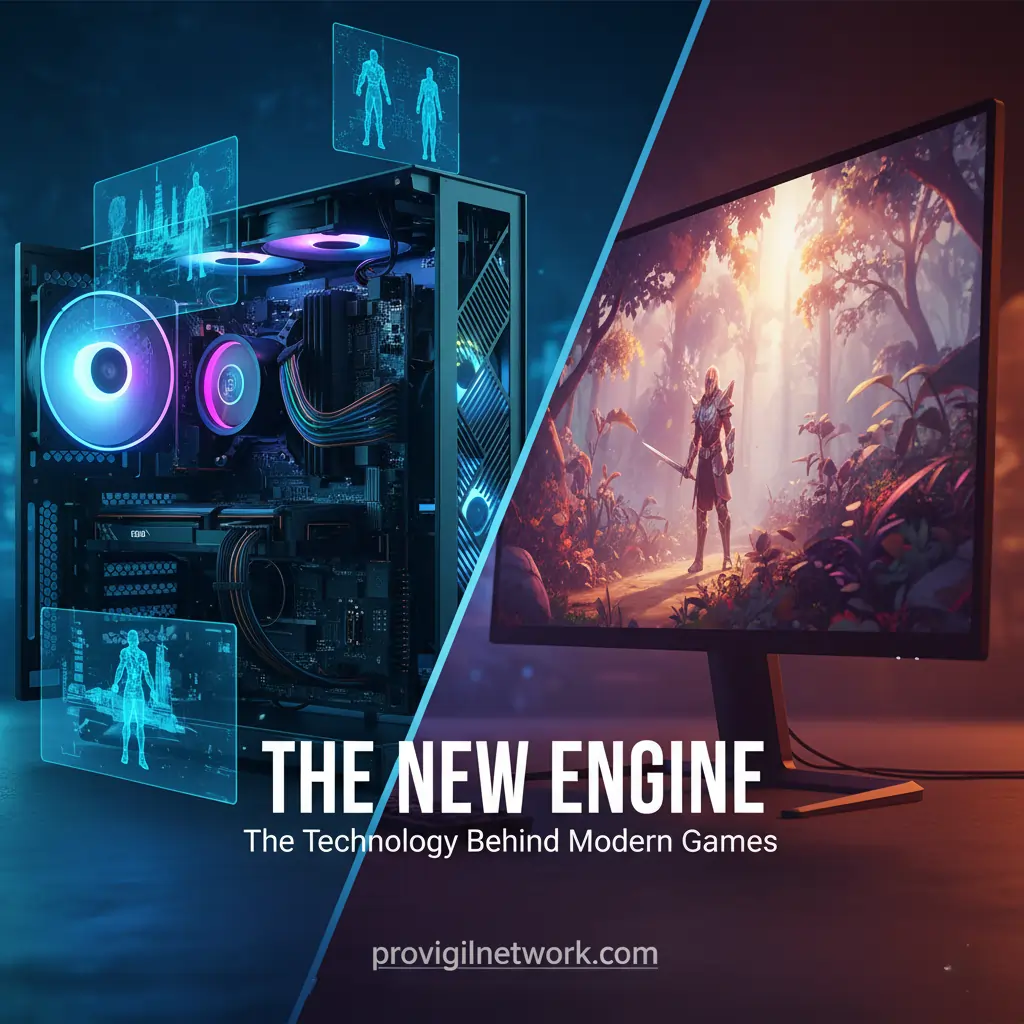
Unreal Engine 5 (UE5) represents a significant jump in what’s possible for real-time graphics. Two of its most groundbreaking features are Nanite and Lumen. Nanite is a virtualized micro-polygon geometry system that lets developers import film-quality 3D models with billions of polygons directly into their games without any loss of detail. This means objects look incredibly realistic, with intricate details that were previously impossible to render in real time. It removes a massive bottleneck in the development process and allows artists to focus on creativity instead of technical limitations.
How Nanite and Lumen Work Together
Lumen is an equally revolutionary feature. It is a fully dynamic global illumination and reflections system that creates incredibly realistic lighting. Unlike older lighting techniques that required developers to “bake” light into a scene, Lumen lights up a scene in real time. This means if you place a light source in a game world, it will cast accurate shadows and reflections instantly. Combined with Nanite, Lumen allows for hyper-realistic environments that react to light in a way that truly blurs the line between games and movies. The result is a game world that feels more alive and immersive than ever before.
“Unreal Engine 5 is more than just a tool; it’s a creative playground. It empowers developers to build worlds with a level of detail and realism that once existed only in their wildest dreams.”
The Power of the Engine: Beyond Graphics
While its visual capabilities are impressive, UE5’s power extends beyond just making games look good. The engine includes a suite of tools that streamline development and enable new gameplay possibilities. For instance, its Chaos physics system creates realistic destruction and physics, making a game world feel more interactive and reactive. Additionally, its robust tools for creating and managing large, open worlds have made it easier for studios to build massive environments without sacrificing performance.
A New Era for Game Development
UE5 also has features that help make the development process more efficient. Its MetaHumans framework allows developers to create highly realistic human characters in a fraction of the time it used to take. This feature, combined with the other tools, lets smaller teams and independent developers create games that look and feel like multi-million dollar productions. This democratization of high-end game development is a huge deal. It means we can expect to see an explosion of innovative and visually stunning games from a wider range of creators. The engine is not just building games; it is building a new generation of game developers.